You have three estimates on the table, and one is thousands of pounds lower than the rest. It is tempting to say yes. But learning how to compare contractor estimates properly means looking past the headline figure to what each price actually covers. This guide helps UK homeowners compare quotes fairly, spot gaps and find the best-value contractor quote, without assuming that the cheapest or the dearest is automatically right.
Why the Cheapest Contractor Quote Isn't Always the Best Choice
The cheapest contractor quote shows the starting price, not the total project cost or the value you receive. A low figure can be perfectly fair. It can also mean the estimate describes less work. Comparing contractor estimates fairly means asking what is in the price, not only how large it is.
Lower price versus better value
Value is what you get for what you pay: scope, materials, workmanship, timeline and terms. Two prices only compare when they describe the same job.
How missing work can make an estimate look cheaper
Contractor quote exclusions are the usual cause. If one estimate leaves out waste removal, electrics or finishing, it is pricing less work, and you may pay for the rest later. Vague materials and loose allowances work the same way.
What to Compare Before Choosing a Contractor
Scope of work and specifications
Is every task listed? Are dimensions, finishes and standards stated, or just “supply and fit”?
Labour, materials and product quality
Check whether products are named or described as “or similar”, and who supplies what.
VAT, exclusions and provisional sums
Confirm whether each price includes VAT; the correct treatment can depend on the work, so check GOV.UK or ask an adviser. A provisional sum is a placeholder for work not yet priced, so the final figure may move. Ask how any difference would be handled.
Timeline, payment schedule and quote validity
Look for a written start date, duration, payment milestones and how long the price stays open.
Insurance, references and relevant experience
Ask for proof of insurance, recent references and examples of similar projects.
How to Compare Contractor Estimates Step by Step
- Price the same work. Give every contractor the same written brief, including dimensions, finishes and anything you want included.
- Compare inclusions and exclusions line by line.
- Check materials and specifications are equivalent.
- Flag provisional or uncertain costs.
- Ask for clarification in writing. Keep the answers so any agreed changes are on record.
- Compare likely total cost, timeline and risks, not just the first number. Allow for items that are still unpriced.
- Check suitability: insurance, references and experience.
Example: Three Estimates for the Same Renovation
These figures are hypothetical. They illustrate the method and are not UK market prices.
| Factor | Contractor A | Contractor B | Contractor C |
|---|---|---|---|
| Initial estimate | £8,000 | £9,200 | £10,000 |
| Waste removal | Excluded | Included | Included |
| Electrical work | Excluded | Included | Included |
| Materials | Unclear | Specified | Specified |
| Timeline | Unconfirmed | 4–5 weeks | 4 weeks |
| Main question | Likely extra costs? | Which items are provisional? | Check scope and payment terms |
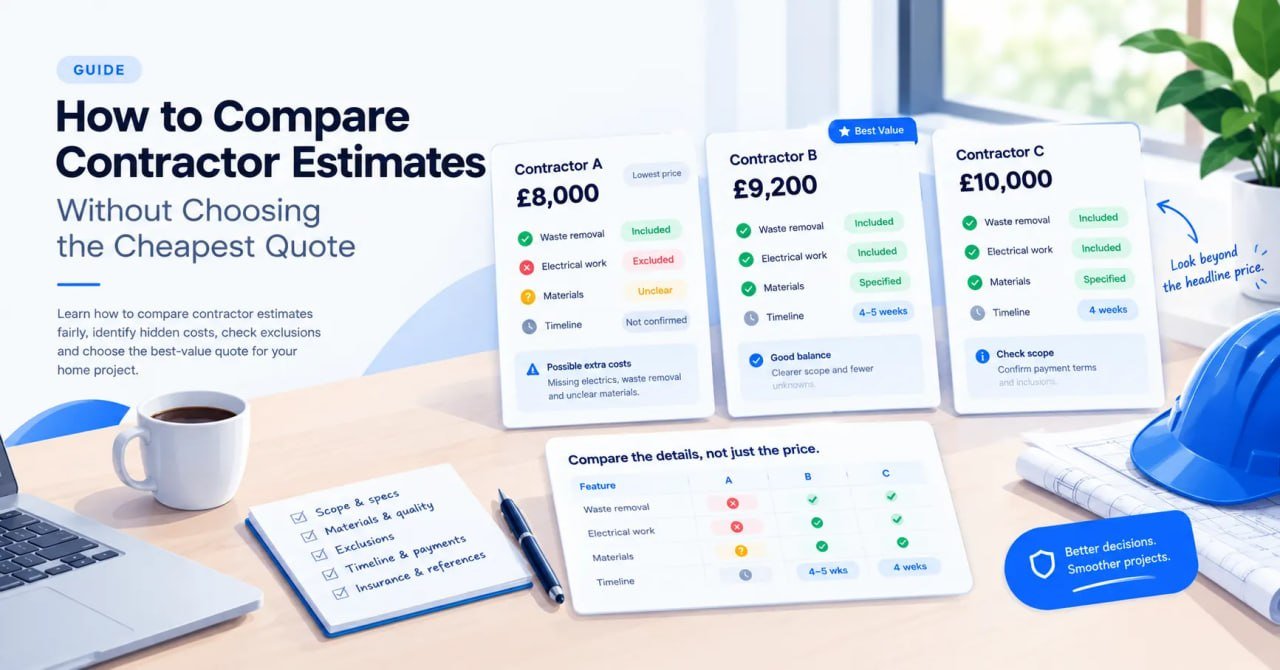
Contractor A looks cheapest, but excluded electrics, waste removal and unclear materials could narrow or erase the gap. Contractor B or C may offer better value, but only once the written scope, quality, terms and suitability are confirmed. The table alone cannot name a winner.
Red Flags to Look for in a Cheap Contractor Quote
Treat these as reasons to ask questions, not proof of dishonesty:
- Vague descriptions or missing specifications
- A much lower price with no explanation
- Unclear deposits or payment milestones
- Pressure to decide immediately
A cheap estimate with a clear scope and sensible terms deserves a fair look. One that cannot explain itself deserves more questions before you commit.
How to Choose the Best-Value Contractor
- Like-for-like scope and clear materials
- Transparent exclusions and explained costs
- A written timeline and clear payment milestones
- Relevant references, insurance and qualifications where required
- A written agreement with a process for changes
No checklist guarantees quality or prevents overruns, but it lowers the risk of surprises.
How ScopeCheck Can Help You Compare Estimates
ScopeCheck lets UK homeowners upload two to five quotes for the same job as PDFs, photos or pasted text. It shows what each quote includes, excludes or leaves unclear, puts VAT on the same basis and suggests questions to ask each trader. You can try a free preview without signing up. ScopeCheck is a decision aid, not a survey or contractor endorsement, and AI can miss details, so always check the original wording.
Frequently Asked Questions
Is the cheapest contractor quote always a bad sign?
No. It may reflect efficient pricing. Just confirm it covers the same work as the others.
How many contractor estimates should I get?
Three is a practical starting point, enough to see differences without overwhelming you.
What is the difference between an estimate and a quote?
An estimate is usually approximate and may change; a quotation is generally a fixed price for defined work. The legal effect depends on the wording and circumstances, so read the document carefully.
Should I choose a contractor with a higher quote?
Not automatically. Choose the one whose confirmed scope, terms and suitability best match your project.
What should I do if contractor estimates differ significantly?
Compare scope line by line, then ask each contractor to explain the differences in writing.
To compare renovation estimates well, compare the complete scope and terms, not the headline price alone. Once every contractor is pricing the same work, the best-value choice is far easier to see.