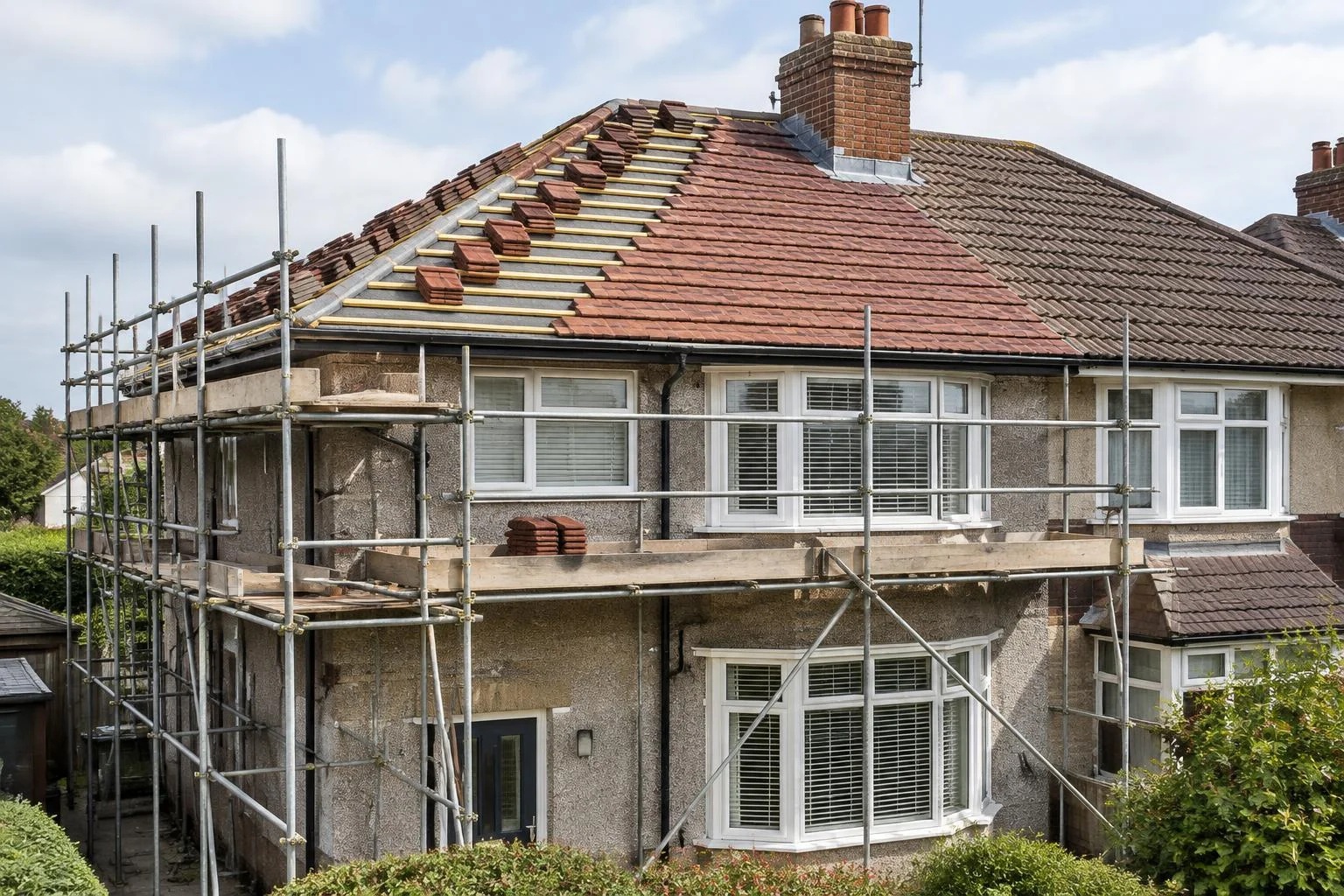
A useful roofing quote explains what the roofer will do, which materials they will use, what the total covers and how unexpected findings will be handled. It should make exclusions easy to spot rather than burying them after a headline price.
“Repair roof” or “complete re-roof” is not enough detail to compare offers confidently. One trader might include scaffolding, new flashings and waste removal; another might be pricing only the covering. Neither total tells you the complete story until the work is clear.
The aim is not to demand a technical manual. It is to get a written description that you and the roofer can refer back to. This is practical guidance for UK homeowners, not legal, surveying or technical design advice.
Same total, different job
IllustrativeScaffolding: Quote A included, Quote B unclear. Chimney leadwork: Quote A included, Quote B excluded. Timber repairs: Quote A partly included, Quote B not mentioned. Waste removal: Quote A included, Quote B not mentioned. Written guarantee: Quote A included, Quote B unclear.
Identify the exact roof area
The quote should name the trader, give contact details and identify the property where work will happen. It should carry a date and explain how long the offer remains available. Keep revised documents clearly dated so an older exclusion does not disappear unnoticed.
More importantly, identify the roof being worked on. A house may have a main pitched roof, rear extension, porch and garage, each with different requirements. A promise to replace the main covering does not automatically include a adjoining flat roof.
Ask the trader to distinguish between a local repair and replacement of the whole covering, the front and rear slopes, and any chimney, valley, dormer or roof-window work. A marked photograph can help settle the boundary without anyone climbing onto the roof unnecessarily.
If the inspection was from ground level, ask which assumptions remain. Photographs are useful evidence, but cannot establish every concealed condition or replace appropriate inspection by a professional.
Describe the work rather than the problem
“Stop leak” describes an outcome, not the work included. A repair quote should identify the suspected source and proposed remedy. This might involve damaged tiles, a valley lining or flashing around a chimney. Ask what happens if the first diagnosis proves incomplete.
For replacement work, establish whether the existing covering is removed, the exposed structure inspected and the specified new system installed. Confirm underlay, battens and junctions separately. Short wording can hide a substantial difference between retaining sound materials and replacing everything.
“Reuse where possible” needs explanation: which materials, how their condition is assessed and what happens if they cannot be reused. Keep a repair proposal and a complete replacement as distinct alternatives rather than describing the smaller total as an equivalent saving.
A roofer may reasonably be unable to confirm concealed conditions before opening up. The useful quote makes that uncertainty visible and explains the decision process instead of treating it as an unlimited extra.
Specify materials and roof details
Two traders can describe the same broad job while allowing for different products. Where the choice matters, ask for manufacturer, material, profile and finish. A particular tile or slate should not quietly be replaced with an alternative after you accept.
For pitched roofs, discuss underlay, battens, ridge, hip and verge arrangements, valleys, flashings, eaves and ventilation. Not every item applies to every roof; the point is to establish the relevant details for your property.
For a flat roof, ask about the waterproofing system and the work beneath it. Does the proposal include decking, insulation, falls, outlets and edge trims, or just a new outer membrane? Similar-looking descriptions may end at different points.
Treat optional fascia, soffit or gutter upgrades as choices. They are not automatically missing essential work. Ask for alternatives to be labelled and priced separately, with a clear explanation of what the base quotation delivers.
Make access and weather protection explicit
Ask whether scaffolding is included, which elevations it covers and who arranges erection and removal. Check the hire period, adaptations and what happens if weather extends the programme. Avoid assuming “all access included” covers every possible arrangement.
If access equipment or a skip might occupy a pavement or road, ask who checks local requirements. Also discuss conservatories, gardens, neighbours and shared routes. Protection for these areas should not be left to a last-minute conversation.
Clarify where materials are stored and how the exposed roof stays weather-resistant between working days. Ask what happens if wind or rain interrupts the work and who handles protective measures. This is a practical programme question, not a request for guaranteed weather.
Check ventilation, insulation and approvals
A replacement can involve more than the visible covering. Ask whether the work affects insulation, ventilation or the roof build-up. Establish who checks relevant approvals, inspections and completion documents, and whether associated administration is included.
Requirements and terminology differ across England, Wales, Scotland and Northern Ireland. Listed or otherwise protected properties may need further enquiries. Confirm the position with your local authority or an appropriately qualified professional rather than treating a quote as approval.
Citizens Advice’s home-improvement checklist recommends checking permissions and approvals before work starts. The linked guidance is for England. Use advice appropriate to your location and circumstances.
Agree how hidden repairs become extras
Damaged timber or decking may only become visible after stripping. Separate repairs already included from provisional figures and excluded work. Ask for photographs, an explanation of the remedy, a written price and your approval before additional work proceeds.
Discuss how urgent protective measures would be handled separately. An agreed process reduces pressure to make a rushed decision while the roof is open. “Timber repairs excluded” leaves the important question of how those repairs will be assessed unanswered.
There is no separate timber-repair or leadwork price in ScopeCheck’s saved roofing benchmark set. Do not divide a whole-roof reference into an invented extra. Obtain a written figure for the actual repair from the trader who will carry it out.
Include waste, making good and handover
Removing old materials is not the same as taking them away. Check loading, skip or disposal arrangements and the final tidy-up. Ask how debris is kept out of gutters, paths and shared access routes.
Clarify making good around disturbed render, aerials, gutters or internal finishes. At handover, ask for photographs of concealed work, product information, relevant completion documents and written guarantee terms. Product and workmanship cover are different; insurance-backed protection should be specifically documented if offered.
Typical UK cost: roofing
Tiled re-roof: £4,000 to £8,000. Slate re-roof: £8,000 to £13,000. Scaffolding: £500 to £1,200. New guttering: £400 to £700
Settle the total and payment terms
The quotation should state the final payable total and VAT treatment clearly. Check how VAT applies to line prices and extra day rates, rather than inferring everything from one heading. Keep estimates and optional additions distinct from the agreed quotation.
Ask what a deposit funds and which completed stages trigger later payments. Agree start arrangements, likely duration and communication about delays. Send the same missing-work questions to every roofer and obtain revised quotes where the answers change the work.
Compare roofing quotes, line by line to see a practical checklist, named price-guide references and an illustrative table. The best quote is not necessarily the longest or cheapest: it makes the work, uncertainties and next decisions clear.